
Hey there, fellow travelers and aviation buffs. If you’ve ever sat on a long-haul flight, staring out the window at the endless ocean below, you know that mix of excitement and a tiny bit of nerves. What if something goes wrong up there? Well, that’s exactly what crossed my mind when I first heard about Delta Flight DL275 diverted LAX back in May 2025. As someone who’s logged more miles in the sky than I care to count— including a few bumpy rides myself— I felt compelled to dig into this story. It’s not just about the facts; it’s about how these moments affect real people like you and me.
Let’s break it down together, from the initial takeoff to the latest updates as of today, November 19, 2025. I’ll share what happened, why it matters, and even a personal story or two to make it feel less like a news report and more like chatting over coffee at the airport lounge.
What Exactly Happened with Delta Flight DL275 Diverted LAX?
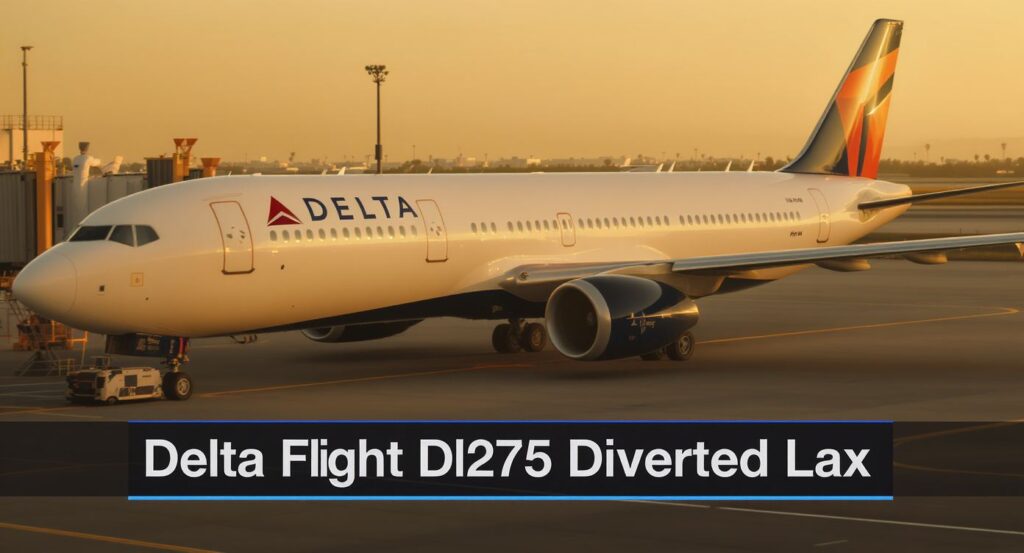
Picture this: It’s May 27, 2025, and Delta Flight DL275 is gearing up for what should be a standard trans-Pacific hop from Detroit Metropolitan Wayne County Airport (DTW) to Tokyo Haneda Airport (HND). The plane? A sleek Airbus A350-941, one of those modern birds designed for efficiency and comfort on long journeys. With hundreds of passengers on board— business folks heading to meetings, families on vacation, maybe even some first-time flyers excited about Japan— the flight pushes back from gate A46 right on schedule.
But things took a turn— literally— when the aircraft was cruising over the Bering Sea. After about seven hours in the air, the crew made the call to reverse course. Instead of pressing on to Tokyo, Delta Flight DL275 diverted LAX, turning what was supposed to be a 13-hour trip into a marathon 12-hour ordeal that ended with a safe landing at Los Angeles International Airport around 1:08 AM PDT on May 28. No one was hurt, thank goodness, but you can imagine the confusion and frustration rippling through the cabin.
I remember a similar situation on a flight I was on years ago from New York to London; we had to circle for an extra hour due to weather, and even that felt endless. Multiply that by hours over the ocean, and it’s a whole different level of stress.
From what we’ve gathered through official reports and aviation tracking sites like FlightRadar24, the plane had already covered a good chunk of the Pacific when the decision came down. It wasn’t a dramatic Hollywood-style emergency— no smoke in the cabin or anything like that— but a calculated move to prioritize safety. Delta Flight DL275 diverted LAX because continuing the journey with the reported issue just wasn’t worth the risk, especially over such remote waters.
If you’re like me and track flights for fun (or out of habit from missing connections one too many times), you might have seen the path on radar: a big U-turn that added five extra hours of flying just to get back to the West Coast.
Why Did Delta Flight DL275 Get Diverted to LAX? The Technical Breakdown
Now, let’s get into the nitty-gritty— why LAX? And what sparked this whole thing? The root cause was a malfunction in the engine’s anti-ice system. For those not deep into aviation lingo (and hey, I wasn’t either until I started researching these incidents), the anti-ice system is crucial for preventing ice buildup on engine parts during high-altitude flights where temperatures can plummet to -67°F or lower. On Delta Flight DL275, one of the Rolls-Royce Trent XWB engines showed a fault in this system while the plane was at 38,000 feet.
This isn’t something pilots ignore. Under ETOPS (Extended-range Twin-engine Operational Performance Standards) rules, which govern long flights over oceans or remote areas, any issue like this mandates a diversion to the nearest suitable airport with proper facilities. LAX made sense as a Delta hub: it’s got top-notch maintenance teams, spare parts, and the infrastructure to handle an international crowd, including customs for those who might need to deplane. Plus, it’s closer than pushing to Tokyo with a compromised system. I once chatted with a pilot friend about these protocols, and he said it’s all about layers of safety— better to land early and sort it out on the ground than risk anything mid-ocean.
Some early rumors floated around about medical emergencies or cabin pressure problems, but those turned out to be mix-ups with other Delta flights. The confirmed issue was purely technical, and the crew handled it like pros. Delta Flight DL275 diverted LAX not because of panic, but because aviation is built on caution. It’s reassuring, really— reminds me of that time my own flight from Chicago to Seattle got rerouted due to a minor hydraulic glitch. We ended up in Denver, and while it messed up my plans, I was grateful for the extra caution.
The Role of Modern Aircraft Design in the Diversion
Diving a bit deeper, the Airbus A350 is a beast of a plane, with redundancies built in everywhere. Even with the anti-ice glitch, the aircraft flew stably for those extra hours to LAX. That’s thanks to advanced engineering that keeps things running even when one part falters. But rules are rules, and for good reason. Think about it: over the Bering Sea, help is hours away. Diverting to LAX ensured quick fixes and minimal downtime.
How the Crew and Passengers Handled Delta Flight DL275 Diverted LAX
Let’s talk about the human side— because flights aren’t just machines; they’re full of people with stories. The captain and crew on Delta Flight DL275 diverted LAX deserve a shoutout. From accounts shared on social media and aviation forums, they kept everyone informed, calm, and as comfortable as possible during the unexpected detour. Passengers reported no chaos, just a professional announcement about the issue and the plan to head to LAX.
I can relate— on a trip to Asia a few years back, our plane had to divert due to weather, and the crew’s steady updates made all the difference. For the 287 souls on DL275 (that’s the typical capacity for an A350 in Delta’s config), it meant extra time in the air, but safety first. Upon landing on Runway 06R, emergency vehicles were on standby as a precaution, but everything checked out fine. No injuries, no drama— just relief.
From passenger perspectives shared online, some were frustrated by the delay, especially those with tight connections in Tokyo. One Reddit user mentioned tracking the flight and wondering why not Anchorage or Seattle, but LAX’s resources won out. Others praised Delta for quick rebookings: 156 folks got on the next DL275, 98 on DL295, and 33 on partners. If you’ve ever been stuck in an airport after a diversion, you know that kind of support eases the pain.
Passenger Rights and What to Expect in Similar Situations
If Delta Flight DL275 diverted LAX hits close to home for you— maybe you’re planning a long-haul soon— know your rights. Under U.S. DOT rules, airlines must provide meals, hotels, and rebookings for mechanical issues. Delta stepped up here, covering those costs and offering compensation where due. Pro tip from my travels: Always have travel insurance; it saved me hundreds once during a similar mess.
The Financial and Operational Impact of Delta Flight DL275 Diverted LAX
This diversion wasn’t cheap. Estimates peg the total hit to Delta at around $2.3 million. Break it down: Extra fuel for the detour, repairs to the anti-ice system, passenger accommodations, and lost revenue from the canceled Tokyo leg. It rippled through their Pacific network for days, affecting schedules and crews.
But in the grand scheme, it’s a drop in the bucket compared to potential risks. Aviation experts point to this as a win for safety protocols. Delta Flight DL275 diverted LAX highlights how airlines balance costs with lives— and they always choose the latter. As someone who’s budgeted for trips gone wrong, I appreciate when companies invest in prevention.
Broader Industry Costs from Diversions
Globally, diversions cost airlines billions yearly— about $8.3 billion, with long-haul ones averaging $127,000 each. DL275’s case was pricier due to the distance and premium route. It’s a reminder to us travelers: Pack patience, because these things happen.
Lessons from Delta Flight DL275 Diverted LAX: Safety and Tech Advancements
What can we take away? First, aviation safety works. The system caught the issue early, and protocols kicked in seamlessly. But it also spotlights the need for better predictive tech. Imagine AI spotting anti-ice faults before takeoff— that’s the future some experts are pushing for. Delta Flight DL275 diverted LAX could accelerate that shift.
Personally, incidents like this make me double-check my flight choices. I now opt for airlines with strong safety records, and I always download the app for real-time updates. If you’re anxious about flying, remember: Stats show it’s safer than driving to the airport.
How Predictive Maintenance Could Change Flying
Tools like AI monitoring could prevent 70% of such issues, saving millions and headaches. For Delta, this might mean upgrading fleets faster. As travelers, we benefit from smoother rides.
Latest Status Update on Delta Flight DL275 Diverted LAX
As of November 19, 2025, the investigation into Delta Flight DL275 diverted LAX has wrapped up with no major findings beyond the initial anti-ice fault. The plane was repaired and back in service within days, and Delta has implemented enhanced checks on similar systems. No lawsuits or further incidents tied to this, which is a relief. Social media buzz has died down, but it remains a case study in aviation training programs.
If you’re flying Delta soon, rest easy— their track record is solid. And if something like Delta Flight DL275 diverted LAX happens to you, know the system is designed to protect you.
Wrapping up, these stories remind us flying is an adventure with built-in safeguards. Share your own diversion tales in the comments— let’s connect over our shared skies. Safe travels!