Hey there, fellow driver. If you’ve ever been cruising down the highway in your GM vehicle and suddenly seen that “Service Stabilitrak” warning pop up on your dashboard, you know the sinking feeling it brings. It’s like your car is trying to tell you something’s off, and all you want is to get back to smooth, worry-free miles. I remember the first time it happened to me in my old Chevy Silverado – I was on a family road trip, and that light flashed just as we hit some rainy patches. My heart skipped a beat thinking about safety for my kids in the back. But after some digging and hands-on tweaks, I got it sorted.
That’s why I’m sharing this guide with you today. We’ll walk through what Service Stabilitrak means, why it triggers, and some tried-and-true fixes to help you drive with assurance again. Let’s get into it, step by step, like we’re chatting over coffee at the garage.
What Is Service Stabilitrak and Why Does It Matter?
First things first, let’s break down what Service Stabilitrak actually is. In GM vehicles like Chevrolets, GMCs, Buicks, and Cadillacs, Stabilitrak is the name for their electronic stability control system. It’s that smart tech working behind the scenes to keep your ride steady, especially when roads get tricky. Think of it as your vehicle’s built-in guardian, using sensors to watch wheel speeds, steering angles, and how the car is moving side to side or rotating.
When the “Service Stabilitrak” light comes on, it’s signaling a glitch in this system. It might disable parts of the stability control, which could mean less grip in slippery conditions or during quick maneuvers. Ignoring it isn’t just about the annoyance of a glowing dash – it’s about your safety and the people riding with you. I’ve talked to buddies who’ve pushed through with the light on, only to feel the difference in handling during a sudden swerve. No one wants that. Addressing Service Stabilitrak issues promptly keeps you in control and prevents bigger problems down the line.
In my experience, this warning often pairs with other lights, like traction control or ABS alerts. That’s a clue it’s not isolated. For instance, on that rainy trip I mentioned, my traction control light joined the party, and it turned out to be a simple sensor hiccup from water splash. Understanding these connections helps you troubleshoot faster.
Common Triggers Behind the Service Stabilitrak Warning
Before jumping into fixes, it’s smart to know what sets off the Service Stabilitrak light. From what I’ve seen and heard from other owners, several usual suspects pop up across GM models.
Faulty Sensors Leading to Service Stabilitrak Alerts
Sensors are the eyes and ears of the Stabilitrak system. Wheel speed sensors, for example, monitor how fast each wheel spins. If one gets dirty, damaged from potholes, or just wears out, it can confuse the system and trigger the Service Stabilitrak message. Steering angle sensors are another big one – they track where you’re pointing the wheel. A bad one might make the light come on during turns, as happened to a neighbor of mine in his GMC Sierra after a minor fender bender.
Throttle position sensors and yaw rate sensors can also play a role. These measure engine response and vehicle rotation. If they’re off, the whole stability setup falters. Low battery voltage is sneaky too; it messes with electrical signals, causing intermittent Service Stabilitrak warnings, especially in cold weather starts.
Engine and Brake-Related Issues Causing Service Stabilitrak Problems
Sometimes, it’s not the stability system itself but linked components. Engine misfires from worn spark plugs can disable Stabilitrak as a safety measure. I once fouled a plug in my truck during a long haul, and sure enough, the Service Stabilitrak light flickered on. Brakes tie in closely – low fluid, faulty ABS modules, or worn pads can all contribute because Stabilitrak relies on braking individual wheels to correct skids.
Recent mods or repairs? Things like tire changes, alignments, or lift kits on trucks like the Silverado can disrupt sensor readings if not done right. One forum story I read had a guy install bigger tires, and his Service Stabilitrak went haywire until he recalibrated everything.
Environmental Factors and Service Stabilitrak Triggers
Don’t overlook the world around you. Driving through deep water or mud can contaminate sensors, leading to temporary Service Stabilitrak issues. Cold snaps affect battery performance, and even hot days can overheat components. If you’ve hit a rough patch of road lately, that jolt might have knocked something loose.
Knowing these causes eases the frustration. It’s not always a major breakdown; often, it’s something straightforward. But always scan for codes first – that’s your roadmap to the real problem.
Step-by-Step Diagnostic Approaches for Service Stabilitrak
Okay, light’s on – what now? Diagnosing Service Stabilitrak doesn’t have to mean an immediate tow. I’ve done this in my driveway more times than I’d like, and here’s how to start.
Using an OBD-II Scanner to Read Service Stabilitrak Codes
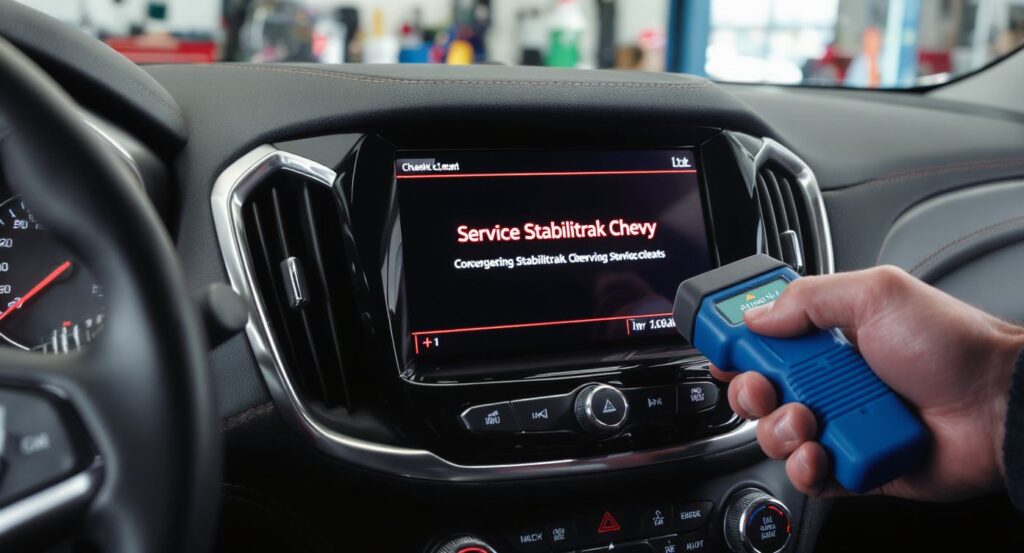
Grab an OBD-II scanner; they’re affordable and user-friendly. Plug it into the port under your dash, turn the ignition on (engine off), and pull the codes. Look for ones like C0561 (system disabled), C0121 (valve relay), or U0415 (invalid data from EBCM). These point to specific culprits, saving guesswork.
In my Silverado case, a quick scan revealed a wheel speed sensor code. It was a game-changer. If you’re new to this, apps like Torque pair with Bluetooth scanners for easy reading on your phone.
Visual Inspections to Spot Service Stabilitrak Issues
Pop the hood and check battery terminals for corrosion – clean them with baking soda and water if needed. Inspect wheel hubs for sensor damage or debris. Brake fluid low? Top it up with the right type, like DOT-3 for most GMs.
Under the vehicle, look at wiring for frays or loose connections. After a winter drive, I found salt buildup on a sensor wire causing my Service Stabilitrak woes. A gentle clean fixed it.
Testing Battery and Electrical Systems for Service Stabilitrak
Use a multimeter to check battery voltage: 12.6 volts off, 13.7-14.7 running. Bad grounds are common – trace and tighten them. If voltage dips, charge or replace the battery. This step often clears intermittent Service Stabilitrak lights without further hassle.
If codes persist or you’re unsure, that’s when pros come in. But these basics empower you to handle many cases yourself.
Proven DIY Fixes for Service Stabilitrak Warnings
Ready to roll up your sleeves? Here are reliable fixes that have worked for me and countless others facing Service Stabilitrak problems.
Simple Reset Techniques to Clear Service Stabilitrak
Start easy. Park safely, turn off the engine. Rotate the steering wheel fully clockwise, then counterclockwise. Wait 15 seconds, restart. This recalibrates the steering angle sensor and often douses the Service Stabilitrak light.
If that doesn’t cut it, try the battery disconnect: Remove the negative terminal, press the brake pedal for 30 seconds to drain residual power, wait 15 minutes, reconnect, and start up. It’s like a hard reboot for your car’s computer. I used this after a sensor clean, and my dash went dark – in a good way.
For some models, hold the Stabilitrak button for five seconds with ignition on, then off for 20 seconds before restarting.
Replacing Common Sensors to Resolve Service Stabilitrak
If codes finger a wheel speed sensor, replacement is straightforward. Jack up the wheel, remove it, unplug the sensor (usually near the hub), bolt in a new one (around $50-100 each), and reconnect. Test drive to verify.
Steering angle sensors might need wheel removal and dash disassembly – trickier, but YouTube guides help. Costs run $150-300. Always use OEM or quality aftermarket parts to avoid repeat Service Stabilitrak issues.
Throttle sensors? They’re engine-mounted; clean first with throttle cleaner before replacing if needed.
Addressing Engine Misfires Linked to Service Stabilitrak
Check spark plugs – gap them properly or swap for new ones (iridium lasts longer). In my truck, fresh plugs banished the Service Stabilitrak light tied to a cylinder misfire. Scan for misfire codes first.
Fuel injectors or coils could be culprits too. Clean injectors with additive, or replace coils if testing shows weakness.
These fixes restore Stabilitrak function, boosting your confidence on the road.
When Professional Help Is Needed for Service Stabilitrak
Not everything’s DIY. If resets fail and lights return, or you notice handling changes, head to a shop.
Choosing Between Dealership and Independent Shops for Service Stabilitrak Repairs
Dealerships have GM-specific tools and trained techs, ideal for complex EBCM or module issues. But they cost more – expect $100-200 diagnostic fees plus parts.
Independent ASE-certified shops often match quality at lower rates, especially for sensor swaps. Read reviews; I found a local gem that fixed my ABS module tie-in to Service Stabilitrak for half the dealer quote.
Typical Costs Associated with Service Stabilitrak Fixes
Wheel sensor replacement: $150-400 per, including labor.
Steering sensor: $300-600.
ABS module: $500-1000.
Full diagnostic: $100-150.
Factor in if multiple parts need attention. Warranty might cover if under mileage limits.
Signs That Service Stabilitrak Requires Immediate Attention
If the light comes with reduced power, pulling to one side, or brake pedal pulsation, stop driving. These signal safety risks. I pulled over once when my truck felt unstable – better safe than sorry.
Pros can flash updates or repair wiring harnesses that DIY misses.
Preventive Measures to Avoid Future Service Stabilitrak Issues
An ounce of prevention beats a pound of cure, right? Keep Service Stabilitrak at bay with these habits.
Regular Maintenance Tips to Prevent Service Stabilitrak Warnings
Schedule tune-ups: Change spark plugs every 60,000-100,000 miles, check fluids monthly.
Battery tests yearly, especially in extremes.
Tire rotations and alignments every 6,000 miles – mismatched tires stress sensors.
After off-road or wet drives, inspect undercarriage for debris.
Best Practices for Driving with Stabilitrak in Mind
Avoid aggressive turns or braking that overworks the system. In bad weather, drive cautiously even with Stabilitrak active.
If modifying (lifts, tires), recalibrate or consult a pro to prevent Service Stabilitrak triggers.
Keep an eye on dash lights; early action stops small issues from growing.
Upgrades That Enhance Stabilitrak Performance
Consider better tires for improved traction, tying into Stabilitrak.
Aftermarket batteries with higher cranking amps reduce voltage drops.
Software updates from dealers can refine system response, minimizing false Service Stabilitrak alerts.
Staying proactive means fewer surprises and more enjoyable drives.
Real Stories from Drivers Dealing with Service Stabilitrak
To make this real, let’s share some tales. My buddy with a GMC Terrain hit a pothole, triggering Service Stabilitrak. A $200 sensor swap later, he was good. Another online account from a Silverado owner traced it to bad grounds after electrical work – tightening fixed it free.
I once helped a family member with their Buick; the light was from low brake fluid after pad wear. Topping up and bleeding brakes cleared the Service Stabilitrak warning. These stories show it’s often fixable without breaking the bank.
FAQs About Service Stabilitrak
Is It Safe to Drive with the Service Stabilitrak Light On?
Absolutely, but with caution—it’s not an immediate emergency like a check engine light for overheating, yet it means your vehicle’s stability control might not kick in during skids or sharp turns. If you’re on dry roads and driving normally, you can likely make it to a mechanic without issues. However, in rain, snow, or high-speed scenarios, reduced stability could increase accident risks. From what I’ve seen in owner forums, many folks drive short distances to get diagnosed, but always prioritize safety and pull over if handling feels off.
Does Ignoring Service Stabilitrak Lead to Other Vehicle Problems Over Time?
Yes, potentially—it won’t directly damage your engine, but unaddressed issues like faulty sensors could strain related systems, such as your ABS or traction control, leading to uneven brake wear or electrical glitches. Long-term, this might trigger more warnings or even affect transmission shifting in some GM models. Owners often report that early fixes prevent cascading repairs, saving money down the road. If it’s a recurring alert, get it checked to avoid bigger headaches.
Can Service Stabilitrak Issues Qualify for Lemon Law Protection?
In certain cases, yes, especially if the problem persists after multiple repair attempts under warranty. For instance, some Chevrolet Equinox owners from 2020-2024 have pursued claims when the light accompanies reduced engine power or repeated shop visits. Lemon laws vary by state, but generally, if the defect impacts safety and isn’t resolved in a reasonable number of tries, you might be eligible for a buyback or replacement. Consult a specialist or check your state’s consumer protection resources to see if your situation fits.
What If the Service Stabilitrak Warning Appears Only in Certain Weather Conditions?
This is common and often points to moisture-sensitive components, like corroded wiring or sensors affected by humidity. In cold weather, it might relate to battery performance dips, while rain could splash debris onto wheel hubs. If it’s weather-specific, note the conditions when it happens and mention them during diagnostics—it helps techs narrow it down faster. Many drivers find that drying out the undercarriage or using dielectric grease on connections resolves these episodic triggers.
How Does Service Stabilitrak Interact with Adaptive Cruise Control or Lane Assist Features?
In newer GM vehicles, Stabilitrak integrates closely with advanced driver aids, sharing sensor data to enhance overall control. If the Stabilitrak system faults, it might disable or limit features like adaptive cruise, causing them to shut off temporarily for safety. For example, if a steering angle sensor fails, lane assist could become unreliable. Always test these systems after clearing the warning to ensure everything syncs up properly.
Are There Any Recalls Related to Service Stabilitrak in Specific GM Models?
Occasionally, yes—GM has issued recalls for Stabilitrak-related software glitches or module failures in models like certain Tahoes or Silverados from earlier years. As of 2025, check the NHTSA website with your VIN for the latest; for instance, some 2021-2023 Equinoxes had updates for intermittent warnings tied to electronic brake control modules. If your vehicle matches a recall, repairs are free at dealerships, so it’s worth verifying annually.
Can Aftermarket Tires or Wheels Trigger a Service Stabilitrak Alert?
Definitely—they can if the new setup alters wheel speed readings, like using non-standard sizes that mismatch the system’s calibration. Oversized tires on trucks, for example, might confuse sensors during acceleration. To avoid this, stick to OEM-recommended specs or have a shop recalibrate after installation. Plenty of off-road enthusiasts report this as a surprise issue, but a quick alignment often sorts it out.
What Should I Do If Service Stabilitrak Comes On Without a Check Engine Light?
This scenario suggests an isolated stability issue, possibly in the yaw sensor or wiring, rather than engine-related. Start by checking for loose connections or recent bumps that might have jarred components. Owners in similar situations often find success with a professional scan for hidden codes, as not all trigger the CEL. Driving carefully until diagnosed is key, since the system might still partially function.
Does Service Stabilitrak Affect Insurance Rates or Vehicle Resale Value?
Not directly—the warning itself doesn’t impact premiums unless it leads to an accident claim. For resale, unresolved issues could lower value, as buyers might see it as a red flag during inspections. However, a documented fix history can actually boost appeal, showing proactive maintenance. If selling, get it resolved and keep records; it reassures potential owners and might even qualify for certified pre-owned status.
How Can I Tell If My Stabilitrak System Needs a Software Update?
Look for patterns like random activations or warnings after battery changes—these often stem from outdated firmware. GM releases updates via dealerships to refine sensor accuracy or fix bugs. If your model is from the last few years, ask during routine service if there’s a bulletin for your VIN. Many drivers notice smoother performance post-update, especially in vehicles with frequent electronic niggles.
Drive Confident with Service Stabilitrak Sorted
There you have it – a full rundown on tackling Service Stabilitrak for that assured feeling behind the wheel. From understanding triggers to DIY fixes and when to call in help, you’re equipped now. Remember my road trip scare? After applying these steps, we’ve logged thousands of miles without a hitch. If your Service Stabilitrak light is bugging you, start with a scan and reset, then dig deeper as needed. Safe travels, and feel free to share your fix stories in the comments. Let’s keep each other rolling smoothly.